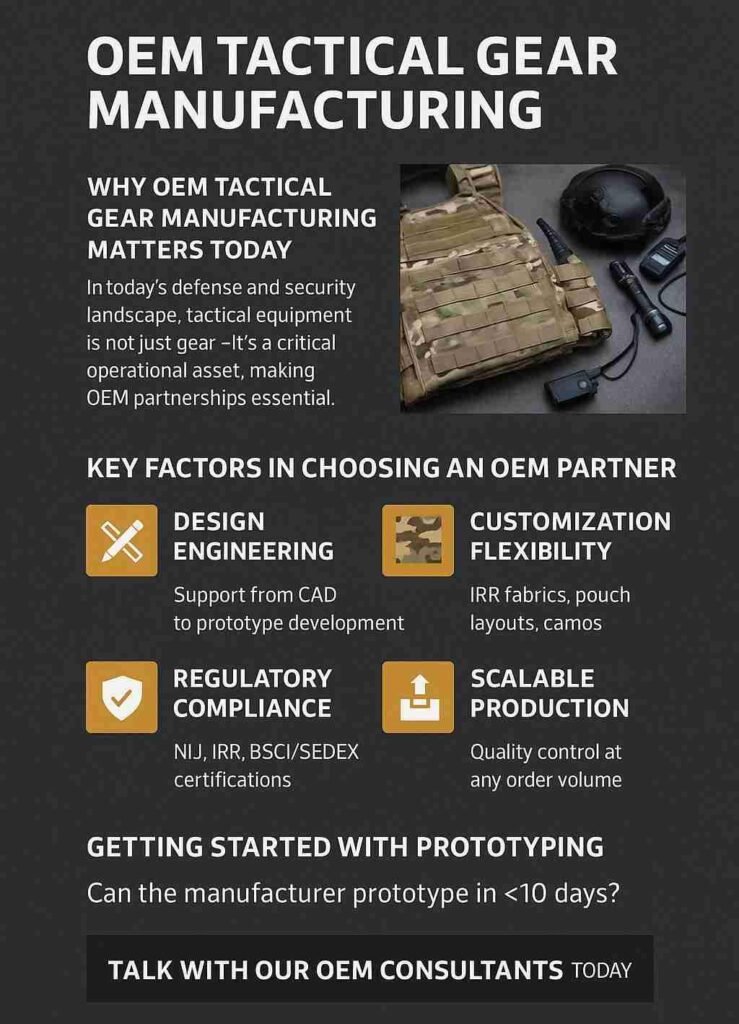
Understanding the Tactical Gear Manufacturing Landscape
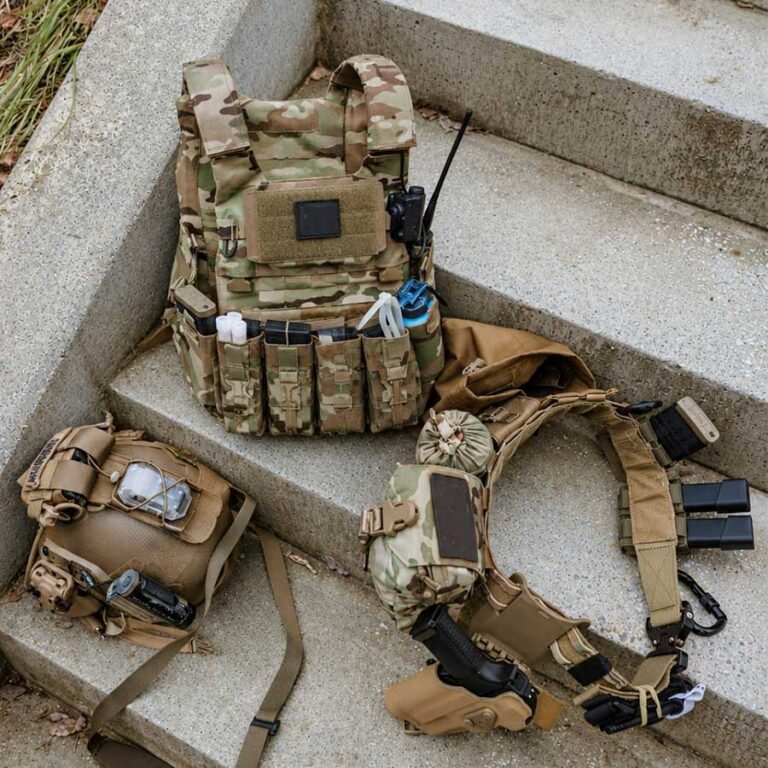
Not all tactical gear is made the same—or sourced the same way. As procurement for tactical vests, plate carriers, and modular systems becomes more technical and compliance-driven, B2B buyers face a key decision early in the process:
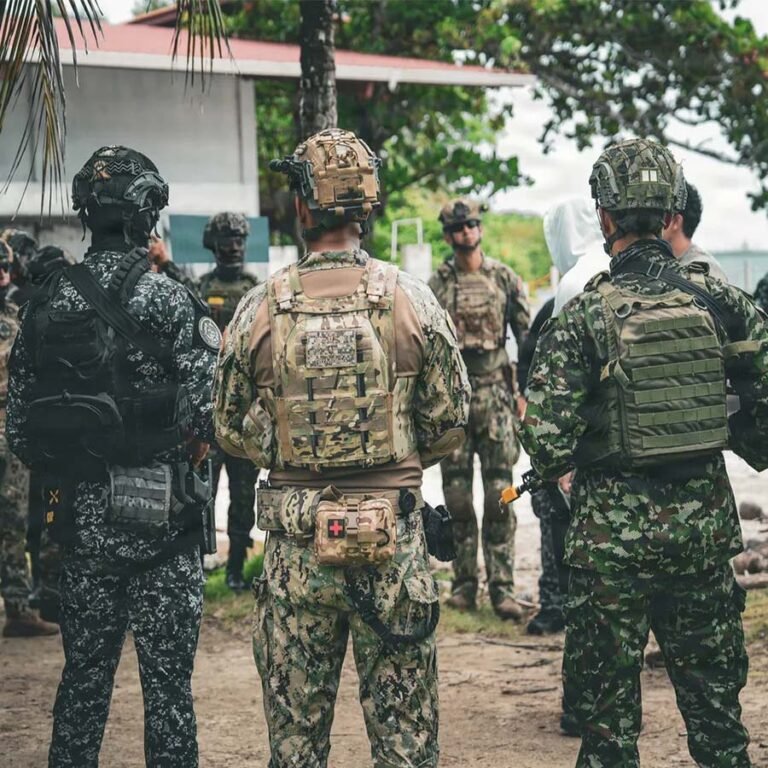
Should you opt for custom-manufactured tactical gear (OEM), or choose from pre-designed, semi-custom options (ODM)? The answer depends on your mission profile, regulatory requirements, and operational budget. In this guide, we help buyers in defense, law enforcement, and private security choose the right path forward.
What Is OEM in the Tactical Gear Manufacturing Industry?
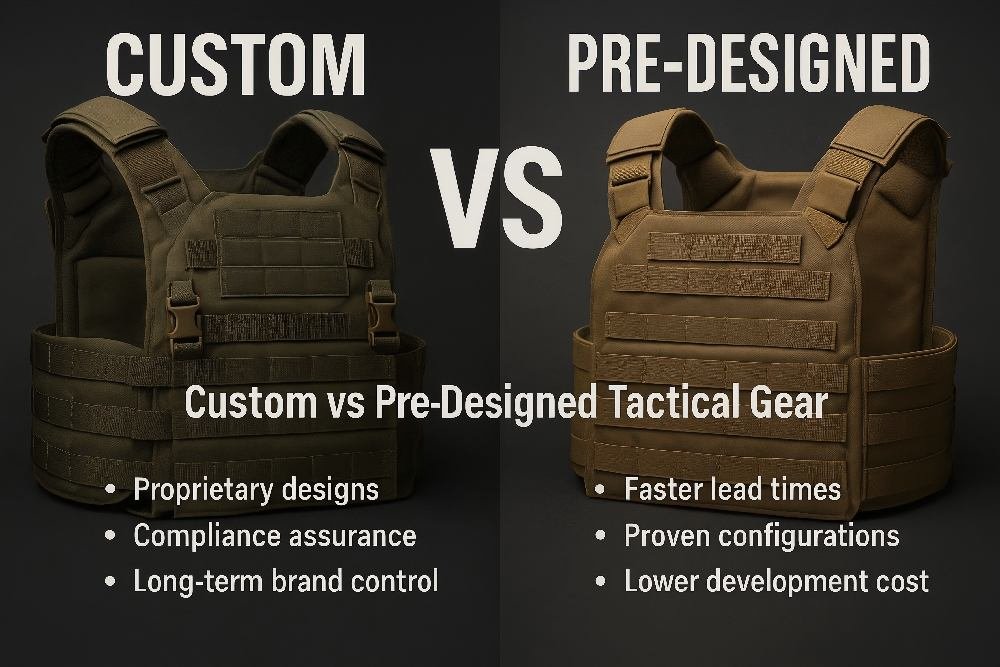
OEM (Original Equipment Manufacturing) refers to building tactical gear based on your own specifications or proprietary designs. It’s the go-to model for government tenders and elite forces.
Best For:
- Government or NATO tenders requiring NIJ or IRR certifications
- Organizations with unique loadout or modular requirements
- Tactical brands seeking exclusive, white-labeled products
Related Reading: OEM Tactical Gear Manufacturer: A Complete Guide for B2B Buyers
What Is ODM in Tactical Gear Manufacturing?
ODM (Original Design Manufacturing) involves using an existing product framework with minor modifications—ideal when speed, budget, or minimal compliance is a priority.
Best For:
- Distributors entering new markets quickly
- Private security contractors need reliable but fast-delivered gear
- Projects with limited design or compliance constraints
Also see: Top Tactical Gear Items Every Private Security Contractor Needs
OEM vs ODM: Tactical Gear Comparison Table
| Feature/Requirement | OEM Model | ODM Model |
| Design Ownership | Buyer-owned (custom CAD/prototypes) | Manufacturer-owned (templated) |
| Certification Support | Full (e.g. NIJ, IRR, ISO) | Basic or on-request |
| Time-to-Market | Longer (due to R&D & sampling) | Shorter (ready-made base designs) |
| MOQ (Minimum Order) | Higher (500+ units typical) | Lower (200–500 units) |
| Branding Options | White label, exclusive product design | Private label with limited layout |
| Cost per Unit | Higher initial, lower long-term | Lower upfront, fewer custom benefits |
When to Choose OEM Tactical Gear
Choose OEM when your mission depends on:
- Field-tested compliance(e.g., NIJ NIJ-certified plate carriers)
- Long-term brand control
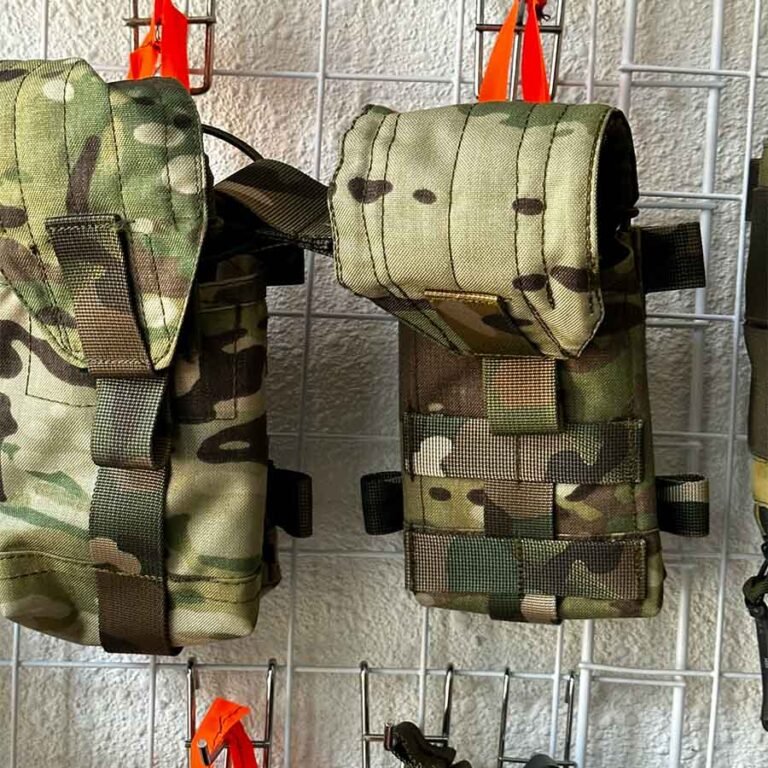
- Specialized pouch configuration
- Infrared or thermal signature suppression
Explore IRR considerations here: What Is IRR Compliant Tactical Gear?
When to Choose ODM Tactical Gear
Choose ODM when your mission demands:
- Fast delivery
- Cost-effective field use
- Simplified approval cycles
- Trial contracts with uncertain renewal
Hybrid Approach: Can You Combine OEM & ODM?
Yes. Some procurement programs pilot with ODM for smaller batches and transition to OEM for full-scale deployment. This approach works well for:
- Tactical brands testing product-market fit
- Government agencies with split budgets
- Contractors scaling from domestic to NATO tenders
How ArmorGuard Supports Both Paths
Whether you’re launching a new tactical gear program or scaling an existing one, ArmorGuard offers:
| Capability | OEM Support | ODM Support |
| CAD + prototyping | Yes (7–10 day cycle) | Optional customization of base models |
| NIJ / IRR Certification | Full support from certified suppliers | Available for select SKUs |
| MOQ | 500 units (flexible by project) | Starts at 200 units |
| Export & Labeling Support | Full tender documentation (EU/US) | Basic commercial documentation |
| NDA / White Label Support | Yes | Yes |
Final Checklist for Buyers
Before you decide:
☑️ Do you need compliance with NIJ / IRR / ISO?
☑️ Do you control your design / branding?
☑️ Is this a tender-based or speed-based project?
☑️ Can you afford the R&D cycle of OEM?
For a more technical breakdown of how certification, material choice, and sampling work in OEM tactical gear, read our Tactical Gear Procurement Guide for B2B Buyers
Choose Strategy, Not Just Products
Choosing between OEM and ODM is a strategic decision—not just a budget one.
The right partner will help you scale, comply, and deploy—not just ship a product.
Ready to discuss which model fits your current tender or gear line?
Speak with an ArmorGuard OEM consultant