Why Material Matters in Modern Armor
In today’s tactical environments, protection is no longer the only requirement for body armor. Modern missions require gear that strikes a balance between defense, mobility, endurance, and modularity. At the core of this evolution is material science.
For procurement officers, OEM clients, and tactical professionals, understanding the differences in armor materials is essential. The choice of material impacts not only weight and protection level but also wearer fatigue, stealth, and even export compliance.
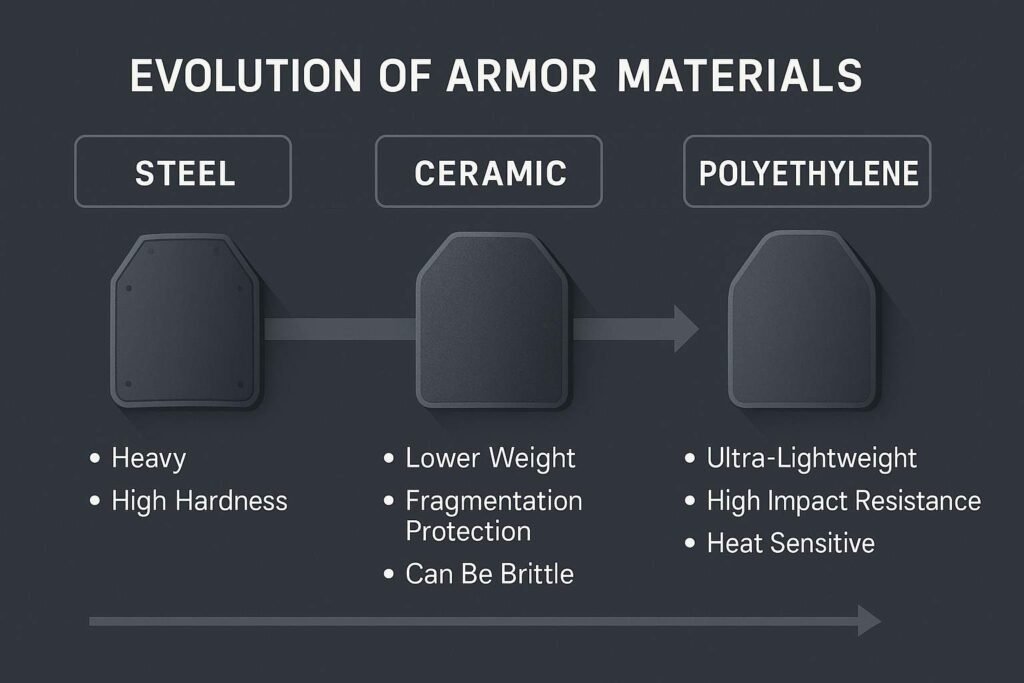
Historical Overview: The Shift from Steel to Modern Composites
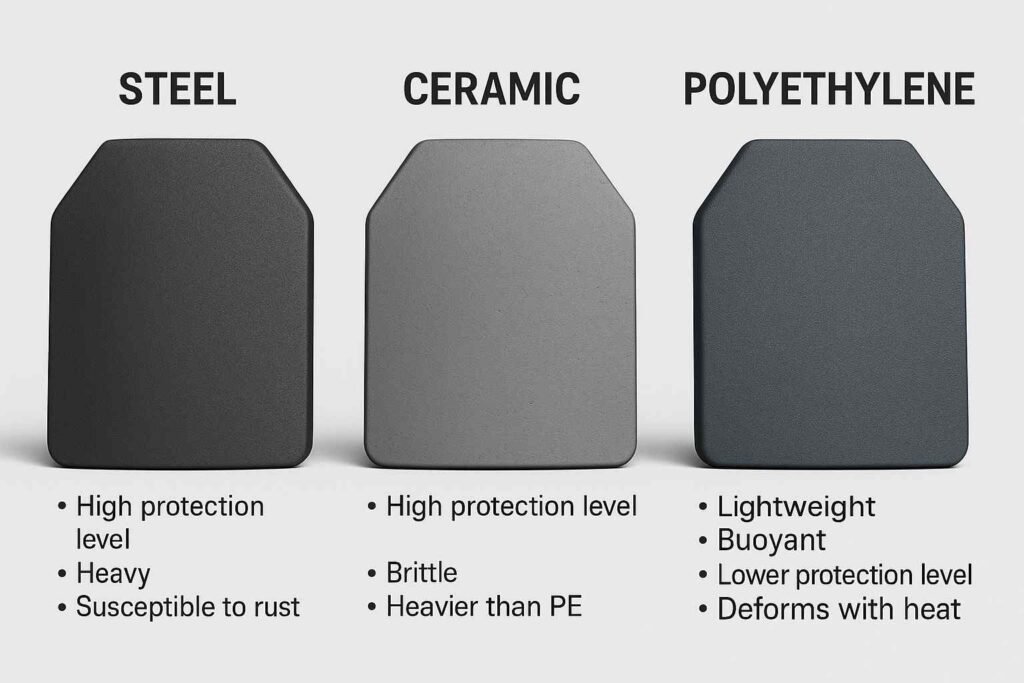
Historically, steel was the dominant armor material, valued for its hardness and affordability. However, its weight and rigidity made it impractical for long missions and high-mobility operations.
The introduction of aramid fibers (e.g., Kevlar) in the 1970s revolutionized soft armor, while ceramic composites brought hard armor protection to lighter platforms. In recent decades, materials such as UHMWPE (Ultra-High-Molecular-Weight Polyethylene) have emerged, enabling ballistic protection at significantly reduced weights.
The trend is clear: tactical armor is moving toward lighter, stronger, and smarter materials.
Modern Armor Materials: Performance, Pros & Tradeoffs
✅ UHMWPE (Ultra-High-Molecular-Weight Polyethylene)
- Pros: Extremely lightweight, buoyant, non-corrosive, and high blunt impact resistance.
- Cons: Less effective against high-velocity armor-piercing rounds; may deform under extreme heat.
✅ Ceramic Plates (e.g., Alumina, Silicon Carbide, Boron Carbide)
- Pros: High protection level (NIJ III–IV); effective against rifle rounds.
- Cons: Brittle under repeated hits; heavier than PE; more expensive.
✅ Hybrid Composites
- Pros: Combine ceramics with PE or aramid for balanced performance.
- Cons: Higher cost; requires precision engineering.
Each material category has a specific tactical role depending on mission requirements, threat level, and deployment environment.
Weight vs Protection: Finding the Balance
A key consideration in armor design is the weight-to-protection ratio.
| Material | NIJ Level | Approx. Weight (10×12” plate) |
| Steel | III | ~3.2–3.5 kg |
| Ceramic | III–IV | ~2.5–3.0 kg |
| UHMWPE | III | ~1.4–1.8 kg |
| Hybrid | III+ | ~1.8–2.2 kg |
UHMWPE cuts this weight nearly in half — a massive advantage in agility and comfort, especially in hot climates or rapid-deployment scenarios.
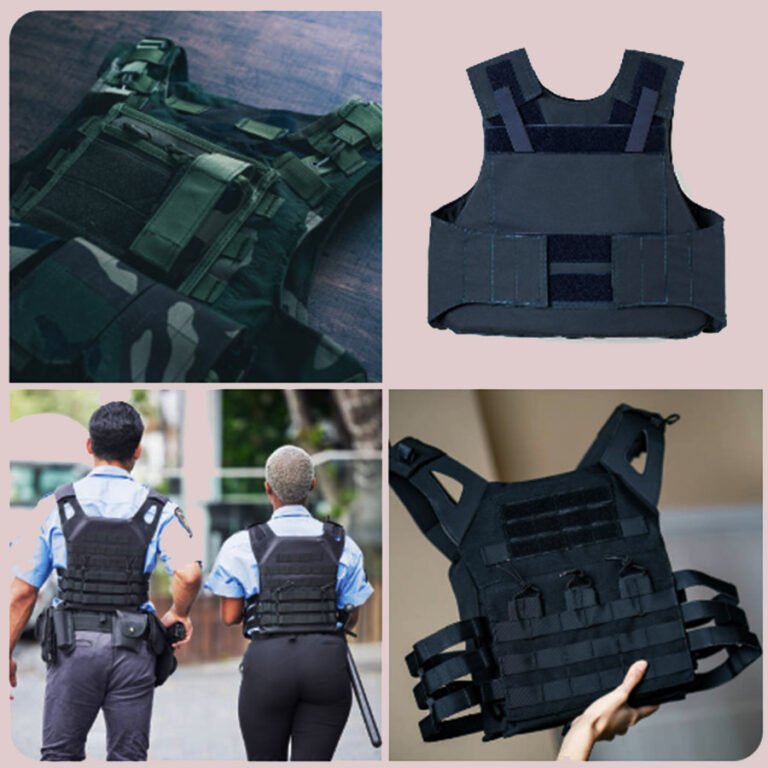
Of course, your plate is only as effective as the carrier that holds it. Learn more about choosing the ideal plate carrier that complements modern materials.
NIJ Compliance & Testing for Modern Materials
The National Institute of Justice (NIJ) provides the global benchmark for ballistic testing and certification. If you’re new to NIJ levels or unsure which one fits your mission profile, check our guide on NIJ levels and ballistic testing standards
When evaluating new armor materials, consider:
- NIJ Level IIIA: Stops most handgun rounds — often paired with soft armor or PE inserts.
- NIJ Level III: Stops 7.62mm FMJ rounds — standard for hard armor.
- NIJ Level IV: Stops .30-06 AP rounds — requires ceramics or hybrid plates.
Not all materials qualify for every level of certification. For example, UHMWPE alone cannot meet NIJ Level IV without ceramic or metal reinforcement.
Procurement teams must verify supplier documentation, third-party testing results, and material compatibility with plate carrier designs.
Armorguard Solutions: Our Material Options for OEM / Project Use
Armorguard develops and manufactures tactical armor systems using certified ballistic materials designed for high-volume OEM and project-level clients.
| Feature | Armorguard Material Offering | Benefit for Buyers |
| Lightweight Protection | NIJ Level III UHMWPE standalone plates | Mobility and reduced fatigue |
| Advanced Rifle Defense | NIJ Level IV ceramic composite plates | High-threat environment compatibility |
| Hybrid Configurations | Custom PE + ceramic bonded systems | Balanced performance for special units |
| OEM/ODM Flexibility | Plate shape, size, cut & label options | Suitable for government and private tenders |
| Global Export Experience | >80 countries supplied | Proven compliance with international tenders |
Whether for covert operations, marine patrols, or infantry deployment, our materials are rigorously tested and proven to perform under the most demanding conditions.
Choosing the Right Material for the Right Mission
Armor isn’t just about stopping bullets — it’s about enabling performance. Every kilogram saved on a plate translates to energy preserved, mission extended, and lives protected.
Understanding the evolution from steel to polyethylene empowers buyers and operators to make informed decisions. With certified materials, battle-tested engineering, and export-ready options, Armorguard helps global clients stay protected and agile — without compromise.