Tactical Stealth Beyond Visible Light
Modern warfare and tactical operations rarely unfold under ideal lighting. Night missions, reconnaissance patrols, and low-light combat demand gear that doesn’t just function—it disappears.
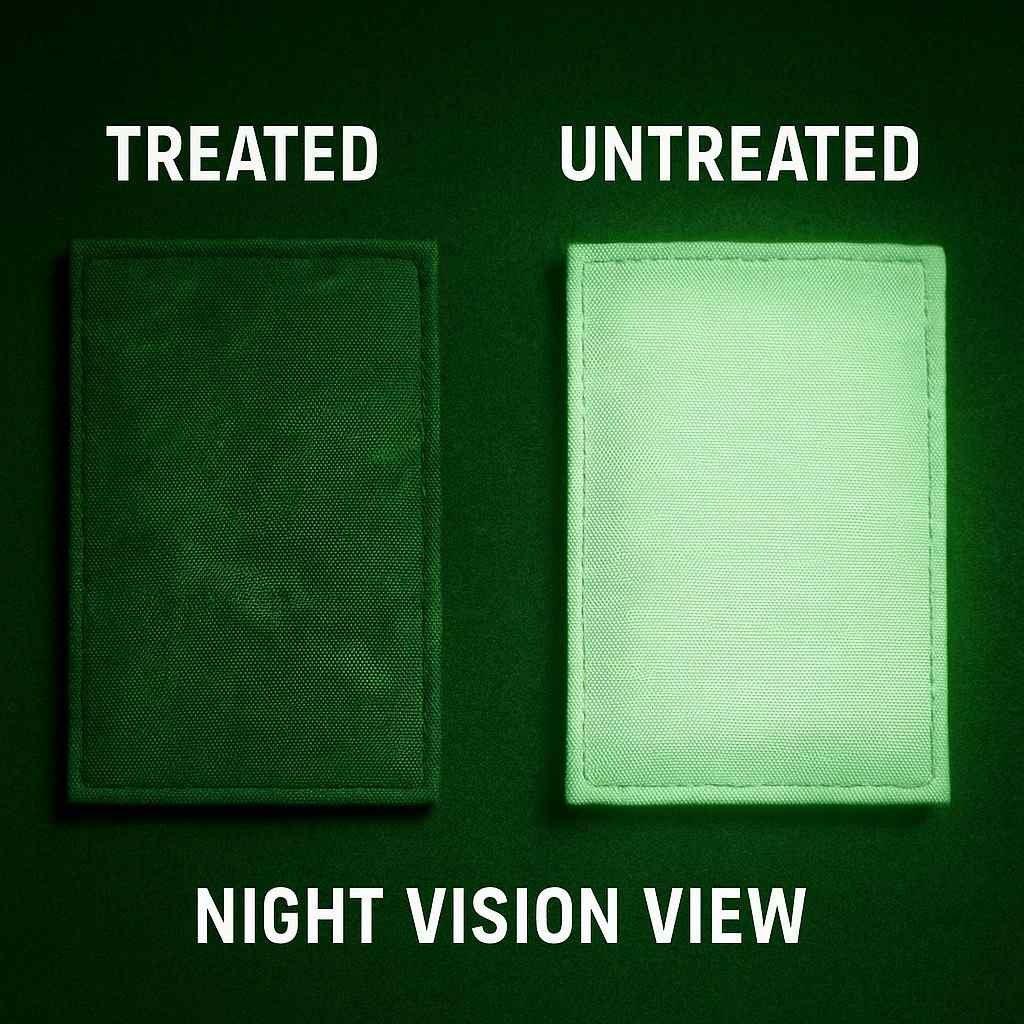
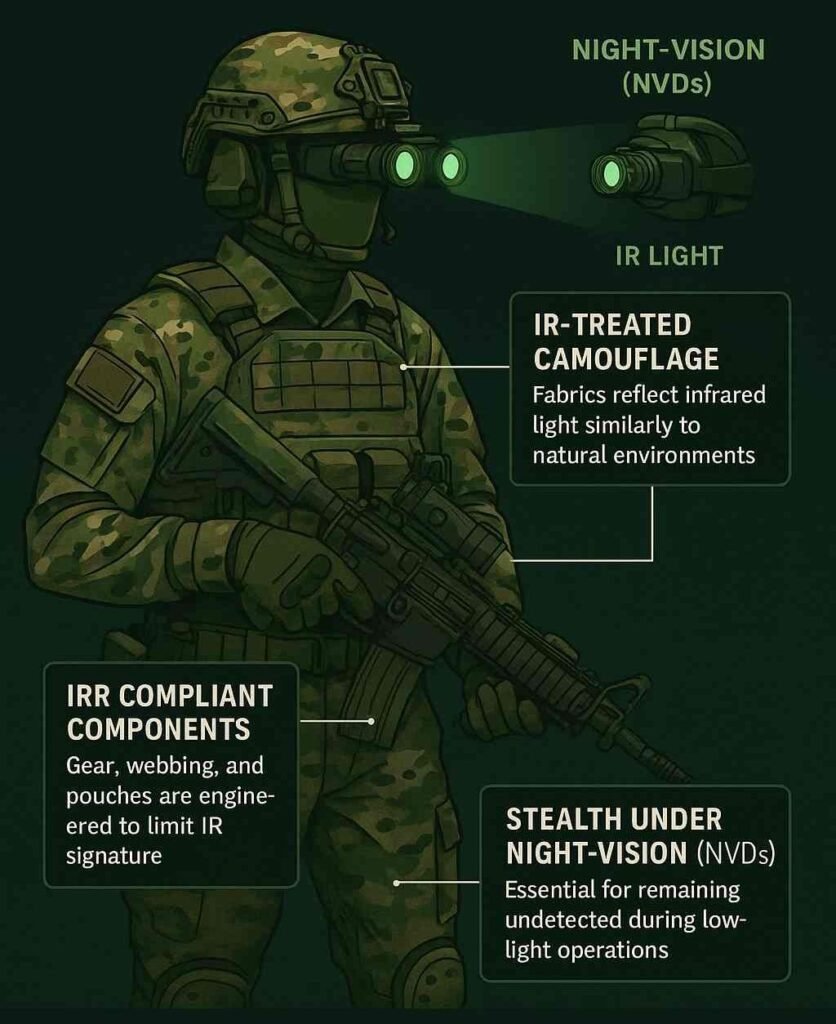
Stealth-rated equipment—especially that has been treated to reduce infrared visibility—significantly lowers detection risk under night vision optics by mimicking natural infrared signatures.
For [OEM tactical gear manufacturers], near-infrared (NIR) compliance is no longer optional—it’s a baseline requirement for contracts involving special operations forces and government procurement.
Defining IRR: How Gear Evades Night-Vision Detection
IRR-treated gear refers to fabrics and components engineered to limit the wearer’s infrared signature under night-vision devices (NVDs). This is achieved by dyeing and treating textiles to reflect IR light similarly to environmental backgrounds, making soldiers harder to detect. Infrared compliance is especially crucial for camouflage patterns; even visually accurate camo can appear bright under NVDs if untreated. This capability is part of the broader strategy known as [multi-spectral tactical gear procurement], which includes protection against both visible and non-visible detection technologies.
Anti-Thermal vs IRR: Dual-Layered Concealment Strategy
- IRR and thermal masking technologies are often confused, but they address different threats.
- IRR reduces near-infrared reflection, while anti-thermal fabrics minimize heat signatures visible to thermal optics.
- Elite tactical units frequently combine both for holistic stealth in jungle, desert, or urban operations.
- Buyers seeking full-spectrum concealment now prioritize [anti-thermal and IRR-ready solutions] that operate across multiple bands.
NIR-Compliant Fabrics in Action: How They’re Engineered
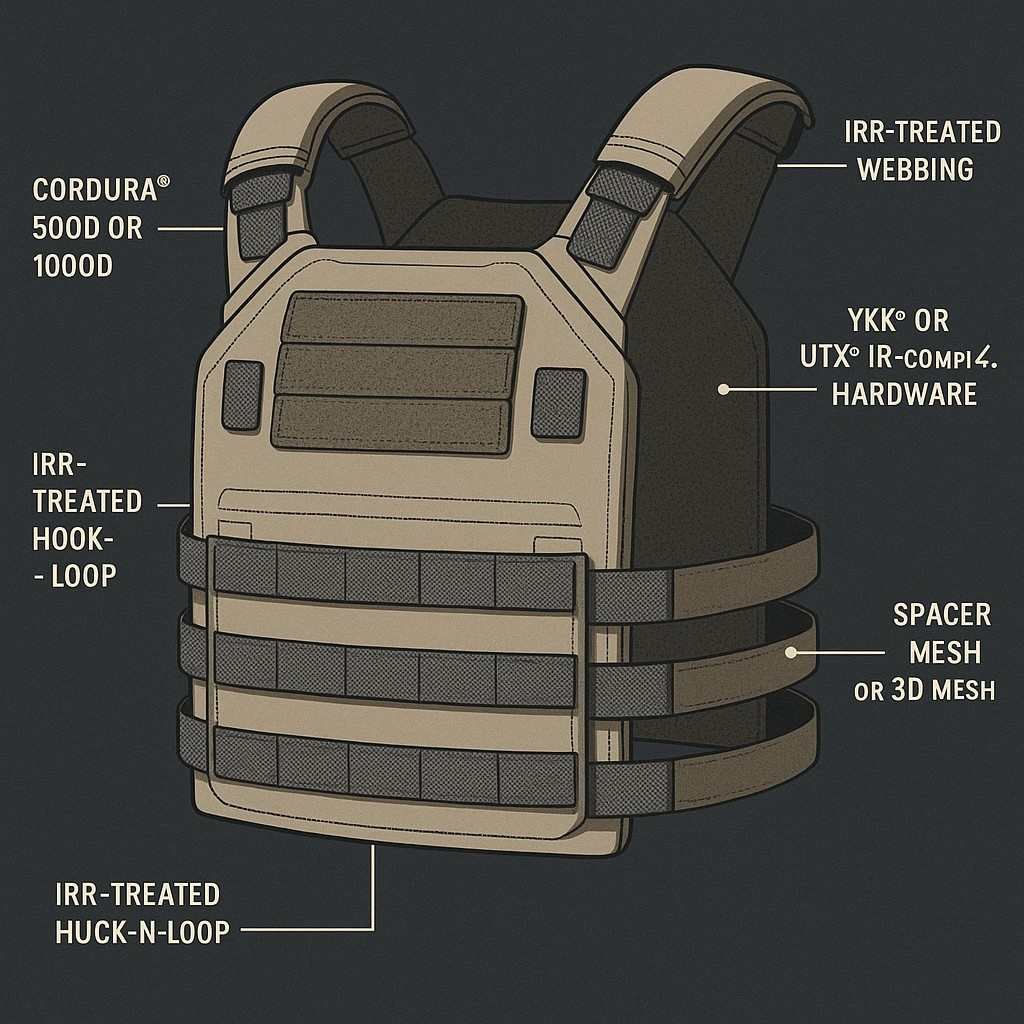
- The effectiveness of IR-optimized materials depends on more than fabric. Webbing, thread, and hook-and-loop must all meet the same standards.
- These materials often begin as Cordura® 500D or 1000D and undergo proprietary IR treatment processes.
- To understand the trade-offs between these materials, refer to our [500D vs 1000D Cordura comparison].
- Reputable OEMs source verified IR-compliant webbing (as provided by Original Webbing and Finn-Nauha) to ensure consistency.
Why IRR Matters for Tactical Buyers
IRR-treated loadouts can directly affect mission outcomes.
- For law enforcement, tactical teams remain less visible during entries.
- For military: IR stealth avoids early identification by drones and NVDs.
- For contractors, meeting infrared requirements often determines contract eligibility.
Mistaking ‘military-style’ gear for IR-treated products is a standard procurement error. Always request night-vision test footage or certification. For deeper guidance on IR standards and legal compliance, see our [tactical gear compliance for government tenders].
How OEM Manufacturers Like ArmorGuard Deliver IRR Solutions
At ArmorGuard, stealth capability is integrated from design through delivery:
- Treated Cordura® with YKK/UTX components from verified vendors.
- Batch-level testing using near-infrared optics.
- Support for camouflage variants (MultiCam®, Coyote, Ranger Green) with full IR treatment.
- Tender documentation, including COAs and simulation images.
Consult our [OEM tactical gear manufacturers] to ensure your next procurement meets field and regulatory demands.
Future Trends: Multi-Spectral Camouflage and Beyond
- IRR is just one layer in the evolving spectrum of operational concealment.
- New textile technologies aim to cover visible light, IR, SWIR, thermal, and radar signatures simultaneously.
- Strategic buyers should partner with OEMs capable of adapting to these advanced concealment requirements.
Conclusion & Next Steps for Buyers
Gear treated for IR reduction is more than a spec—it’s a survival tool. By understanding how these systems operate, requesting relevant documentation, and collaborating with compliant OEMs, buyers can minimize their exposure and maximize mission success.