I spent years in tactical gear wholesale, watching newcomers make the same costly mistakes over and over again. The difference between struggle and success often boils down to some practical insights that most suppliers won’t tell you.
Here are 15 secrets I hope someone can share with me earlier – real lessons that can save you time, money, and trouble.
1.Where can I buy tactical gear wholesale, and which countries offer the best sourcing opportunities?
You can directly purchase tactical equipment wholesale from manufacturers, wholesalers, trading companies, and B2B platforms such as Alibaba. Popular purchasing countries include China, Thailand, Vietnam, India, and the United States.
China has extensive manufacturing capabilities, while Thailand and Vietnam provide skilled labor and cost-effective production. If you are an American purchaser, it is better to source from Southeast Asia because the tariffs there are lower.
For a typical tactical backpack, China tariffs total ~55.1% (base 17.6% + 25% + 12.5% Section 301), versus ~30.1% for Thailand (17.6% + 12.5%). Check exact codes at hts.usitc.gov.
2.How can I distinguish a genuine tactical gear manufacturer from a wholesaler, trading company, or middleman?
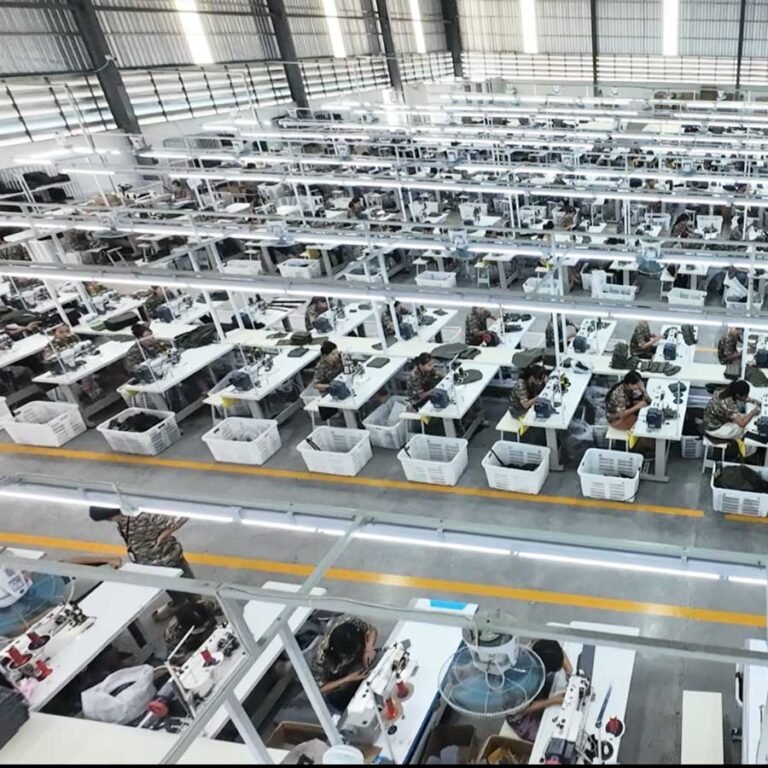
You can request the factory address, business license, and recent production photos or videos showcasing cutting, sewing, and assembly lines. Genuine manufacturers can provide a detailed description of their internal processes, typically offering ISO certificates or sample production records.
Trading companies and middlemen often can not provide real factory evidence or give vague answers to production. Always start with paying for sample orders – real factories control quality and delivery time more strictly than pure traders.
3.Is buying tactical gear directly from manufacturers cheaper than purchasing from wholesalers or distributors?
Yes, purchasing directly from the manufacturer is usually cheaper because it eliminates the middleman’s markup. For large-scale production, the unit price may be much lower than that of wholesalers or distributors. Tactical gear manufacturers can also provide better bulk pricing and flexible customization services.
However, due to an increase in the minimum order quantity, extended delivery cycles, transportation, customs, and quality risks, the total landed cost may rise. Wholesalers typically provide better value for smaller orders through faster delivery, lower risk, and readily available inventory.
Before making a decision, it is essential to calculate all costs.
4.What factors affect tactical gear wholesale prices, and how can I negotiate better prices and payment terms?
Wholesale prices are mainly influenced by order volume, material quality, customization level, and raw material costs. Larger quantities, standardized designs, and flexible delivery cycles usually lower unit prices.
In order to obtain more favorable prices and payment terms, you can request quotes from multiple suppliers, increase the number of orders, and establish long-term contracts. You can also propose favorable payment terms, such as a 30% deposit and a balance before shipment.
5.What is the typical MOQ for wholesale tactical gear, and how can I negotiate lower minimum order quantities?
The MOQs for general wholesale tactical gear ranges from 50-500 pieces for standard items to 100-1000 units for custom or private label products, depending on complexity and materials.
In order to negotiate a lower minimum order quantity, starting from the sample order, different SKUs are mixed to meet the overall minimum requirement, requiring inventory materials instead of customized colors, or promising to reorder in the future. Smaller or specialized suppliers are often more flexible in first-time or trial orders than large factories.
6.What hidden costs should I consider when purchasing tactical gear wholesale beyond the quoted unit price?
When purchasing tactical gear wholesale, you should consider additional costs beyond the quoted unit price, including:
- Sample cost, customization charges, tooling cost, packaging cost, inspection fees, and international shipping
- Import duties, customs clearance, taxes, insurance, and currency exchange fees
- Warehousing and inventory management cost
- Other potential costs (such as defective products or delayed shipments)
| Illustrative wholesale purchase | |
| Example figures only, not actual shipping or tariff quotations. | |
| Expense | Cost |
| 1,000 tactical backpacks × $20 | $20,000 |
| International shipping | $2,000 |
| Cargo insurance | $200 |
| Import duties | $1,500 |
| Customs clearance | $300 |
| Other fees | $200 |
| Total landed cost | $24,200 |
| Actual landed cost per backpack | $24.2 |
| The actual amount will depend on destination, HS classification, applicable taxes, shipping terms, and other charges. | |
7.How can I evaluate the quality of wholesale tactical gear and avoid cheap materials or manufacturing shortcuts?
You can do this:
- Request detailed material specifications (fabric denier such as 500D or 1000D Cordura, zipper brand such as YKK, thread type and hardware quality).
- Always order paid samples and test their durability, suture strength, and actual usage.
- Verify the factory quality control process, require ISO certification or third-party inspection report.
8.Why can mass-produced tactical gear differ from pre-production samples, and how can I prevent quality inconsistencies?
Mass production can differ from samples due to material batch variations, different production lines or workers, cost-cutting after approval, or scaling issues that affect consistency.
You can prevent this situation by approving sealed “golden” pre-production samples, providing detailed technical packages, requiring third-party inspections during and after production, and including strict quality clauses that comply with AQL standards in the contract.
Retain approved samples for comparison with bulk cargo.
9.What certifications, military standards, and legal compliance requirements should I check when purchasing tactical gear wholesale?
Key checks include:
- ISO 9001 for quality management and amfori BSCI for responsible working conditions.
- NIJ standards for body armor or ballistic items.
- For U.S. government or military contracts, verify Berry Amendment compliance (U.S.-made preference). Also confirm export controls (ITAR where applicable).
- CE marking for Europe.
Requirements vary by product and market, so verify them before placing an order.
10.What is the difference between MIL-SPEC tactical gear and ordinary military-style equipment?
MIL-SPEC gears comply with the strict specifications of the US Department of Defense in terms of materials, construction, durability, and performance testing.
Ordinary military equipment only imitates its appearance. It uses commercial grade materials and does not require passing the same strict military standards or testing.
11.Should I choose OEM, or ODM tactical gear to maximize my brand's profitability?
The best option depends on your budget, brand positioning, and customization needs.
OEM can give you better control over product design and differentiation, but usually requires more development time and investment. ODM allows you to customize existing factory designs, reduce development costs, and accelerate market entry.
12.How can I build long-term relationships with tactical gear suppliers to secure better prices, reliable stock, and priority production?
I suggest you do this:
- Place consistent orders, make payments on time, and communicate clearly about forecasts and requirements.
- Share honest feedback and treat suppliers as partners rather than one-time suppliers.
- Visit the factory as much as possible, sign long-term agreements, and gradually increase production.


13.What are the advantages and disadvantages of dropshipping versus holding inventory when selling tactical gear?
Dropshipping:
Advantages: Low start-up cost, no inventory or storage costs, easy to test products, minimal operational workload. You only need to pay for the products sold.
Disadvantages: Low profit margin, limited control over quality and transportation speed, risk of stock shortage, limited brand selection, and potential customer service issues.
About tactical gear dropshipping, you could refer to this article: The Best Items To Dropship: Tactical Gear
Holding inventory (traditional wholesale):
Advantages: Higher profit margin, faster transportation speed, better quality control, customized packaging/branding, and more reliable marketing and bulk sales inventory.
Disadvantages: Requires a large amount of upfront capital, storage space, and the risk of unsold inventory. You can also handle packaging, transportation, and returns on your own.
14.How can I test market demand and validate product quality before committing to large wholesale orders?
You can order paid samples first and test their durability and fit in person or with the target user. Run small test ads, pre orders, or direct shipping campaigns to measure actual demand without a large inventory.
Once the sample is approved, you will place a trial order with a lower minimum order quantity, and then review customer feedback and returns before expanding the scale. This method validates quality and market benefits while limiting financial risks.
15.What should I know about seasonal production schedules, shipping times, and factory capacity when placing wholesale orders?
When placing wholesale orders, you need to consider seasonal demand, factory workload, material availability, and international shipping schedules. Sea freight usually takes 30-45 days or more. Air freight is faster, but more expensive.
You should always confirm production capacity and exact delivery time in writing, and place orders for customization or mass production 2-3 months in advance to ensure slot safety and avoid delays.